Why is a Karate Punch "Twisted"? The Anatomy of the Tsuki
Understand the science behind the rotation of a Karate punch. Discover how the "twist" of the wrist increases penetration, protects joints, and maximizes the power of the Tsuki.
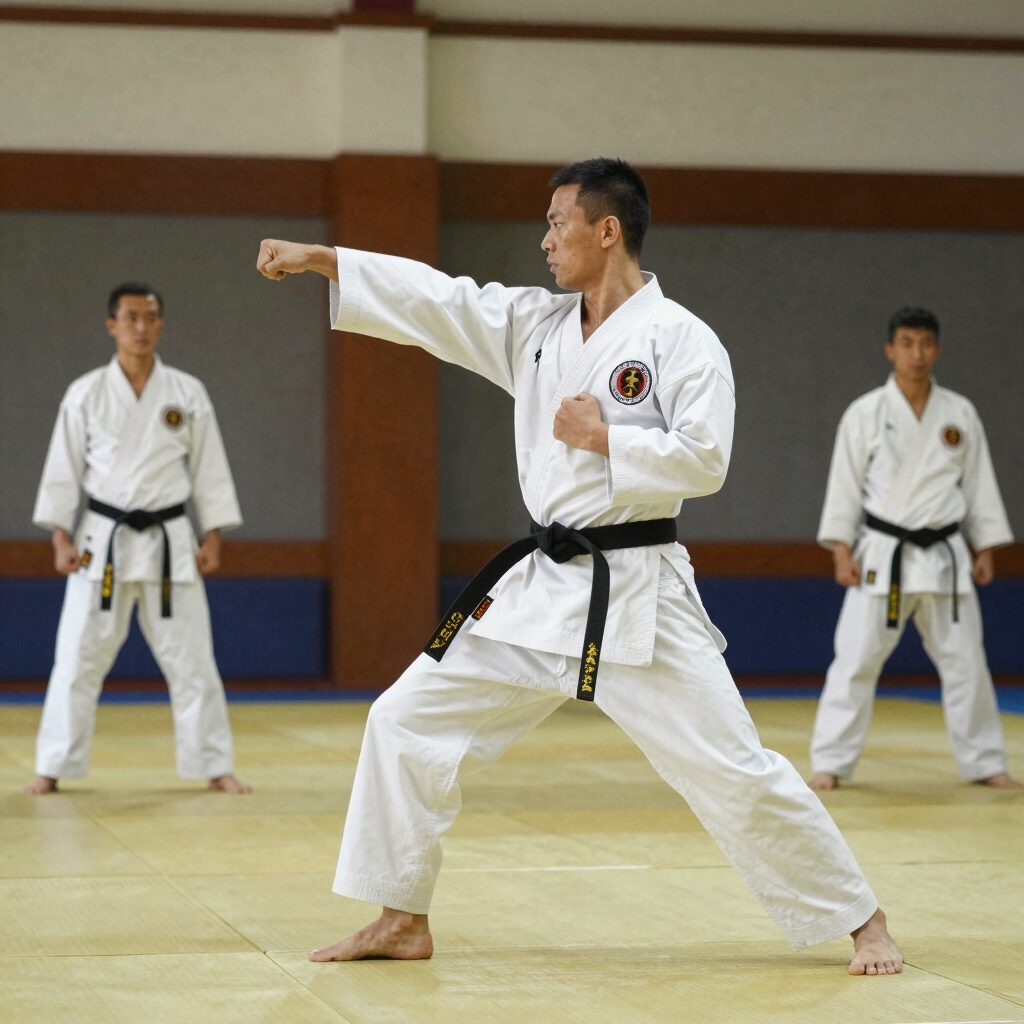
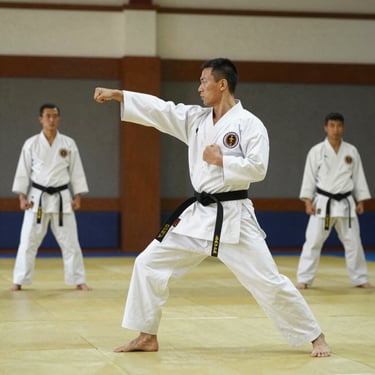
In Karate, no movement is random. If you observe a Seiken Tsuki (forefist punch) in slow motion, you will see that the fist travels most of the way with the back of the hand facing down or to the side, performing a 180-degree rotation only in the final inches before impact.
This spiral movement is what gives a Karate punch its unique "drilling" characteristic. Instead of just pushing the target, the karate-ka's goal is to drive through it. Have you ever considered that a rifle bullet spins as it travels to maintain stability and increase penetration power? The Karate punch uses the same principle.
The Drill Effect: Maximizing Penetration
The primary physical reason for wrist rotation is the increase in torque. When the fist rotates at the moment of impact, it creates an effect similar to a drill or a screwdriver.
Friction and Impact: By rotating in the final millisecond, the fist "tears" and penetrates the target surface much more efficiently than a flat impact.
Energy Focus: Rotation helps ensure that the force is concentrated exclusively on the first two knuckles (Kento), which are the most solid and resistant parts of the hand.
Did you know this final twist also helps deflect the opponent's guard? If the punch meets a block, the rotation can help it "slide" through the adversary's arms to reach its goal.
Anatomical Protection: Locking the Structure
Beyond power, rotation has a vital safety function for the practitioner. When you rotate your fist to the final position (palm facing down), a specific bone and muscle alignment occurs in your arm:
Wrist Alignment: The rotation "locks" the radius and ulna bones (forearm), creating a solid structure that prevents the wrist from bending or spraining upon impact.
Elbow Protection: At the moment of the twist, the elbow positions itself to be protected against hyperextension, as the triceps and forearm muscles tense together.
Shoulder Engagement: The wrist rotation is connected to the lowering of the scapula. This prevents the shoulder from "shrugging" toward the ear, which would weaken the strike and leave the neck vulnerable.
Synchrony with Hikite and Kime
As we have seen in previous articles, nothing in Karate works in isolation. The rotation of the attacking arm is perfectly synchronized with the rotation of the arm pulling to the waist (Hikite).
This opposing "screwing" action of both arms simultaneously creates a central tension that stabilizes the torso. This refined neuromuscular coordination ensures that when you reach the point of impact and the rotation is complete alongside the exhalation (Kime), the energy has nowhere to go but into the target.
Impact Beyond the Physical: Intent and Decision
Anatomically, the twist finishes the strike. Philosophically, the twist represents the conclusion of a decision. In traditional Karate, we do not throw punches aimlessly; every Tsuki must carry the intent of being the last one necessary.
The spiral movement reflects nature: from the Milky Way to hurricanes, the spiral is how energy moves most efficiently in the universe. By punching this way, the karate-ka is simply following the natural laws of efficiency.
Contact
contato@haikaratedo.com