The Meaning of Oss: Much More Than a Simple "Hello"
Do you know what it really means to say "Oss"? Go beyond the greeting and discover the philosophy of resilience, respect, and perseverance that supports this word in Karate.
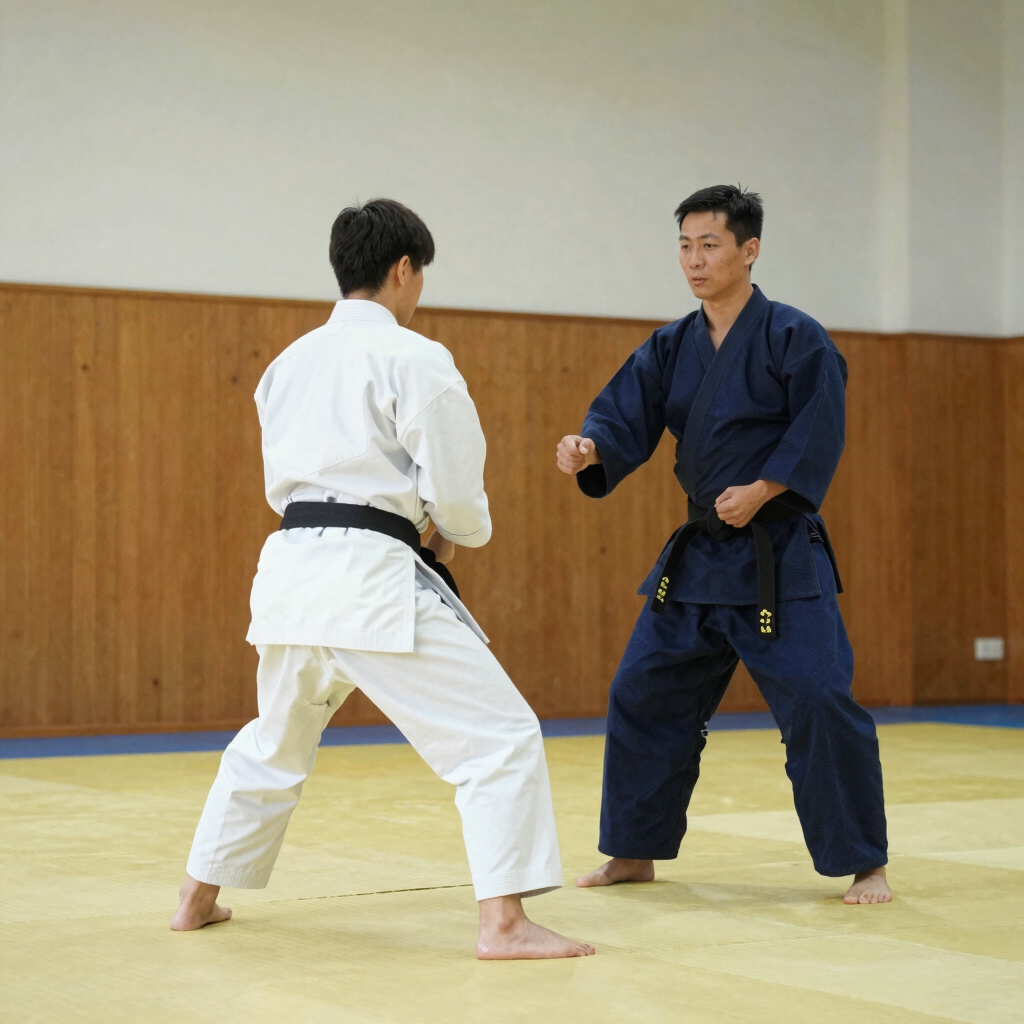
If you have ever been near a Karate Dojo or watched a class, you have certainly heard a short word, spoken with energy and frequency: "Oss!". It is used to greet the teacher, to confirm an instruction was understood, to salute a partner before training, and even to express gratitude at the end of practice. To the casual observer, it seems like just martial arts slang or a substitute for "hello" and "yes."
However, "Oss" is one of the most meaningful expressions within Japanese culture and traditional martial arts. It summarizes, in just two syllables, the entire mindset a practitioner must carry on and off the mat. Have you ever wondered why we use such a specific word instead of our native language? There is an invisible strength in this expression that connects karate-kas worldwide, regardless of the language they speak.
The Linguistic Origin: To Push and To Endure
The word "Oss" (pronounced oh-ss) is a contraction of a more formal Japanese expression: Osu no Seishin. It is formed by two Kanji characters (ideograms) that reveal the true depth of the term:
Osu (押): Means "to push," "to press," or "to pressure." It represents the attitude of making a maximum effort.
Shin (忍): Means "patience," "perseverance," or "endurance." This is the same ideogram used in the word Ninja (one who endures).
Therefore, "Oss" literally means "to press oneself through endurance." When you say this word, you are not just saying "hi." You are asserting: "I will push myself, I will endure the pressure, and I will not give up."
"Oss" as a Commitment to Perseverance
In Karate, progress is not linear. There are days when your arms feel like lead, your stances lack stability, and your mind is full of external worries. It is precisely in these moments that "Oss" becomes most important.
Saying "Oss" to your Sensei after a difficult technical correction is a commitment. It is like saying: "I understand my mistake, I accept the challenge to correct it, and I will persist until I succeed." In ancient Japan, this expression was used to show that a student was willing to endure whatever was necessary to learn the art. Today, we seek resilience. Have you noticed how your ability to handle discomfort in training has increased since you began applying this "push and endure" mindset?
The Functions of "Oss" in the Dojo
While its roots are profound, in daily practice, "Oss" serves several functions that help maintain order and focus:
Respect and Greeting: It establishes a common ground of mutual respect.
Confirmation and Attention: It replaces "yes, sir/ma'am," showing that you are tuned into the instruction.
Gratitude: At the end of an exercise, it thanks the partner for the opportunity to train together safely.
Self-Suggestion: Vocalizing an intention of strength helps the brain overcome fatigue and recruit more power.
Correct Use and Respect for Tradition
Despite being a powerful word, the use of "Oss" requires good judgment. In traditional Karate, we don't usually use the word casually outside of a martial arts environment or with people who don't practice the art. Furthermore, there's etiquette regarding who says "Oss" first. Generally, the younger student greets the more senior student, demonstrating humility.
An interesting point: in some very formal contexts in Japan, "Oss" is considered a rather masculine or "rough" expression. Therefore, in certain schools, you will see gentler forms of address. However, in modern global Karate, it has become the universal symbol of martial brotherhood. Have you ever felt that instant connection when meeting another karateka, even without ever having met before, simply by the way you greeted each other?
The "Oss" Spirit Beyond the Mat: Resilience in Life
The real test of a karate-ka does not only happen during the one-hour training session. The real challenge begins when you fold your gi and return to the real world. Life presents "pressures" all the time: deadlines, health issues, or emotional challenges.
Carrying the Oss spirit into life means not giving up at the first sign of difficulty. It means understanding that to achieve any valuable goal, you will have to "push" (Osu) and "endure" (Shin). When you face a difficult problem at work with the same calm and determination you show against a higher-ranking opponent, you are living true Karate.
Can you identify situations in your current routine where a little more "Oss spirit" would make a difference? That task you've been putting off, or that habit that's proving difficult to break—couldn't they be overcome with this mindset of perseverance?
Your Voice and Your Strength
The "Oss" shouldn't be said lazily or merely out of habit. It should come from the Hara (your energy center in the abdomen). It should be a short, dry sound, full of intention. The next time you utter this word in the Dojo, try to feel the weight of its history and the commitment it carries.
Do you feel that your "Oss" has the same strength at the beginning and end of an exhausting workout? Can you perceive the change in your mental posture when you consciously decide to apply the philosophy of perseverance to a personal challenge? What does this word mean to you today: just a greeting or a life motto?
Contact
contato@haikaratedo.com