The Karategi (Uniform): Why White and What is Its Importance?
Discover the origin and meaning behind the white Karategi. Understand why the Karate uniform is a symbol of humility, equality, and spiritual discipline.
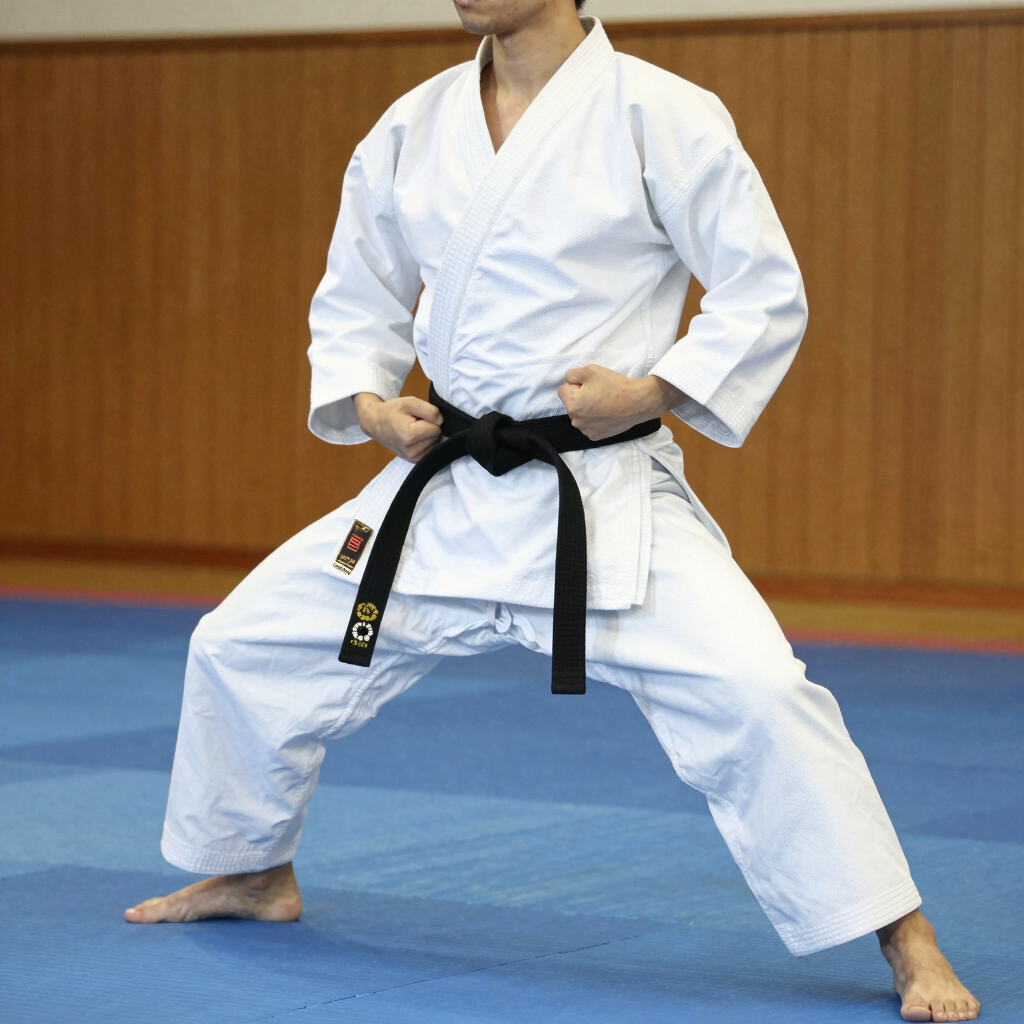
Upon entering a dojo for the first time, the sight of dozens of people dressed exactly the same way—in white from head to toe—creates an impression of order and purity. Unlike other sports that adopt vibrant colors or sponsorships, traditional Karate maintains an immaculate white. But have you ever wondered why this color was chosen and why we don't just use common gym clothes to train?
Wearing the Karategi is the first step in building discipline. As the practitioner ties their belt and adjusts the jacket, they undergo a psychological process of "shedding skin," preparing the spirit for the effort to come.
Historical Origin: From Okinawa to Mainland Japan
In the beginning, in Okinawa, practitioners trained in their everyday work clothes or just undergarments due to the tropical heat. The uniform we know today was an adaptation made by Master Gichin Funakoshi when he introduced Karate to mainland Japan in the 1920s.
He drew inspiration from the Judo uniform created by Jigoro Kano. The goal was to create a garment sturdy enough to withstand pulls and sudden movements, yet light enough to allow for fast kicks. Did you know that the choice of unbleached cotton, which turns white after washing, was a practical decision that eventually became a philosophical pillar of the art?
The Symbolism of the Color White
In Japan, the color white is associated with concepts such as purity, truth, and, in ancient contexts, the death of the ego. In Karate, white carries three fundamental meanings:
Equality: Inside the dojo, it doesn't matter if you are a doctor, a student, wealthy, or poor. Everyone wears the same white. The only permitted distinction is the belt color, representing experience and dedication.
Humility: White soils easily. This teaches the karate-ka to be careful with their presentation and that the pursuit of perfection (cleanliness) is constant.
Empty Mind: White represents a blank sheet of paper, ready to be written upon by the master's knowledge. It is the visual representation of the state of Mushin (empty mind).
Myth vs. Reality
There is a common legend in dojos that the Karategi is white because that was the funeral color in ancient Japan, symbolizing that the practitioner was ready to give their life in combat.
While historically the choice was more pragmatic—based on the availability of unbleached cotton and the influence of Judo—this funeral interpretation carries a profound philosophical truth: total commitment. Wearing white is a reminder that, during training, your selfish "I" dies to make room for learning. It is the commitment to train with the intensity of someone who knows each movement could be the most important of their life.
Practical Importance and Biomechanics
Beyond symbolism, the Karategi is a training tool. Different cuts and fabrics serve specific functions:
The Sound of Kime: A heavy canvas Karategi (common in Shotokan) produces a sharp, snapping sound when a strike is executed with correct technique. This provides auditory feedback on speed and focus.
Durability and Protection: The reinforced fabric protects the skin against mat burns and allows for grappling techniques without tearing the clothes.
Freedom of Movement: The wide cut in the legs and armpits is essential for high kicks and hip rotations to occur without hindrance.
Did you know the way the jacket is overlapped (always left over right) originates from Samurai tradition? They kept the right side free to draw their sword.
Contact
contato@haikaratedo.com