Karate and Women: Why This Art is a Powerful Ally for Self-Confidence
Discover how Karate helps women develop unshakable self-confidence. Understand the psychological impact of martial arts practice and its role in real personal safety.
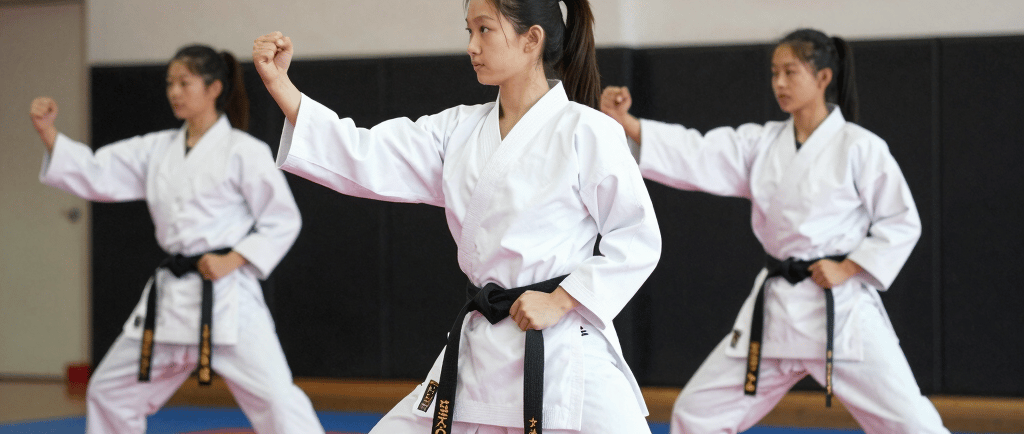
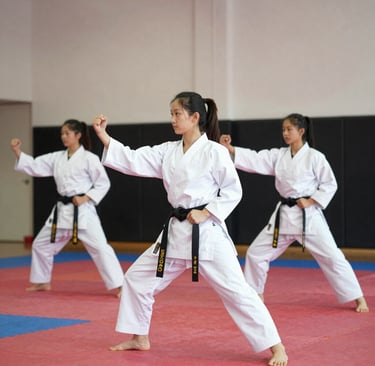
Historically, martial arts were seen as a predominantly male environment, but this scenario has changed drastically. Today, women not only occupy the dojos but also lead organizations and win world medals. However, for most practitioners, the greatest trophy is not a gold medal, but the internal transformation that Karate provides.
For a woman, deciding to enter a dojo is the first step in a journey of self-discovery. Karate acts as a practical tool to deconstruct limiting beliefs about fragility and capability. Have you ever felt that society expects you to always be "soft" or "restrained"? Karate offers a safe space for you to discover that you can be strong, powerful, and assertive without losing your essence.
The Psychology of Posture: The Body Speaks to the Mind
One of the first lessons in Karate is posture. Stances (Dachi) require you to be firmly connected to the ground, with a straight spine and a focused gaze. This physical adjustment has a direct impact on brain chemistry. Psychological studies suggest that "power poses" can reduce cortisol (the stress hormone) and increase confidence-related hormones.
In the dojo, you learn to take up your space. You don't shrink; you expand. Did you know that this change in physical posture begins to reflect in the way you enter a meeting room or handle a difficult conversation? When you train your body to be solid and stable, your mind begins to believe that you can also be emotionally solid in the face of challenges.
Facing Fear Through Technique
Fear is a natural reaction, but Karate teaches us not to be paralyzed by it. During controlled sparring (Kumite), the practitioner is exposed to pressure situations where they must react quickly. This creates a process of "desensitization" to conflict:
Distance Control: Learning to keep someone out of your personal space is a lesson in boundaries.
Response to Impact: Receiving a block or a controlled strike teaches you that you are more resilient than you imagine.
Focus on the Goal: In a fight, you learn to ignore external noise to focus on what truly matters.
Real empowerment in Karate doesn't come from the idea that "nothing will happen to me," but from the certainty that "I know what to do if something happens."
The Voice from Within: The Power of the Kiai
Many women are taught from an early age not to "make noise" or to be discreet. In Karate, we are encouraged to use the Kiai—the explosive shout that accompanies the technique. The Kiai is the externalization of our vital energy and determination.
Shouting with intention inside the dojo helps break emotional blocks of repression. It is an exercise in affirmation. When you release a powerful Kiai, you are telling the world (and yourself) that you are there, that you are strong, and that you will not be silenced.
Overcoming Limits and Redefining "Impossible"
Graduation in Karate is a ladder of small victories. Learning a complex Kata, earning a new belt, or successfully executing a kick that once seemed impossible are concrete proofs that you can evolve through effort.
In Karate, beauty is not measured by external aesthetic standards, but by the efficiency of movement and strength of character. As you see your own technical progress, you begin to question what other "impossibilities" in your professional or personal life can be overcome with the same discipline.
Contact
contato@haikaratedo.com