Ibuki and Kiai: The Science of Breathing and the Explosion of Internal Force
Explore the biomechanics of breathing in Karate. Discover how Ibuki and Kiai stabilize the torso, protect internal organs, and maximize Kime power through intra-abdominal pressure.
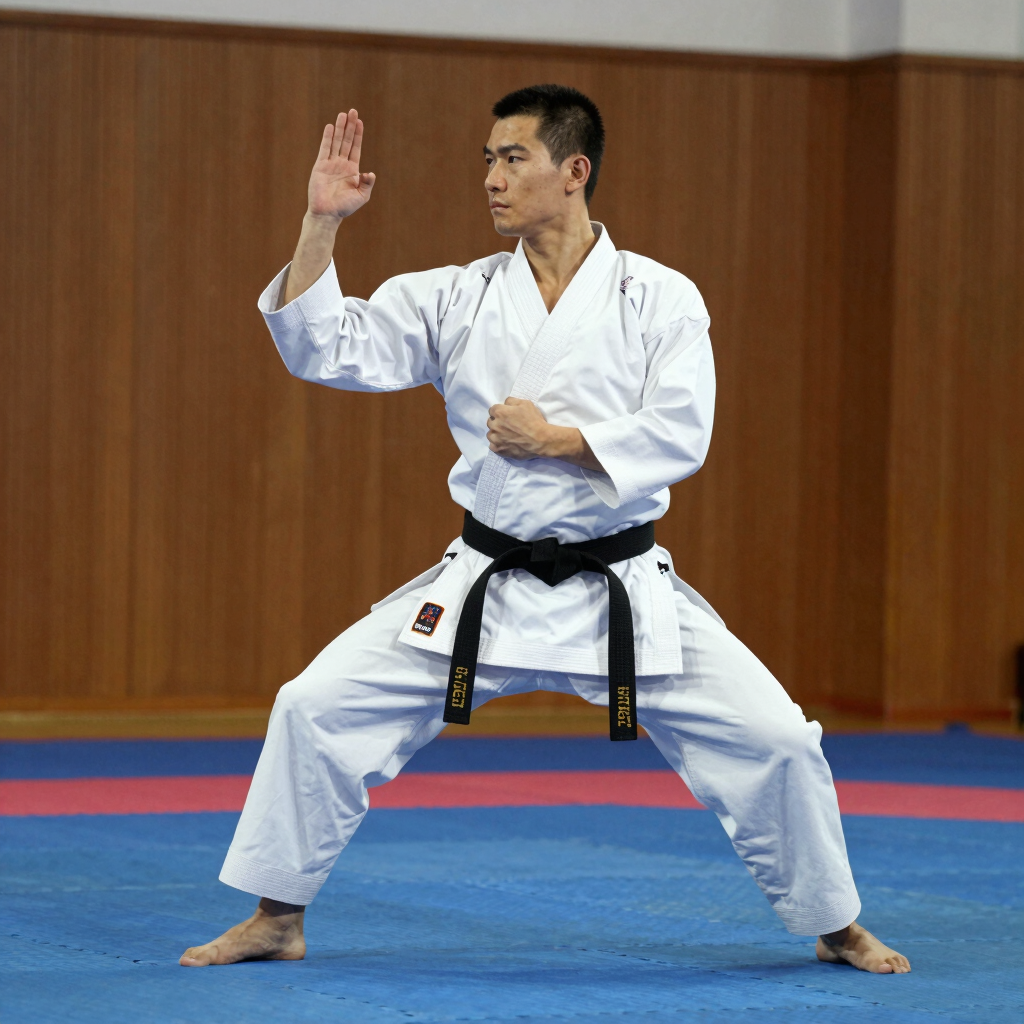
In Karate-Do, mastery of the body begins and ends with breath control. While a beginner focuses only on muscle strength, the advanced practitioner understands that the muscles are merely the vehicle, while breathing is both the fuel and the stabilizer. Among the various breath control techniques, Ibuki and Kiai stand out as the definitive tools for converting air into physical power and biological protection.
If you have ever felt out of breath after just a few minutes of Kata, or noticed your strikes losing impact when you are tired, the problem is likely not your muscular endurance, but how you manage internal pressure. Have you ever stopped to think that the martial shout is not meant to scare the opponent, but to ensure your own body doesn't collapse under the force you generate?
Ibuki: The Breathing of Steel
Ibuki is a technique of forced abdominal breathing characterized by a loud, deep, and controlled exhalation. In Shotokan, it is the foundation for many isometric contraction movements. Unlike the shallow thoracic breathing we use in daily life, Ibuki originates in the Tanden (the point below the navel).
The Biomechanics of Stabilization
When performing Ibuki, we simultaneously contract the diaphragm and the abdominal muscles. This creates what science calls Intra-abdominal Pressure (IAP). Imagine your torso as a soda can:
If the can is empty (no internal pressure), it crushes easily under any weight.
If the can is closed and under pressure, it can support hundreds of pounds without deforming.
Ibuki transforms your torso into that "pressurized can." It "locks" the spinal column from the inside, allowing the force generated by the legs to flow to the arms without dissipating. Did you know that without this internal pressure, the impact of a strong punch could cause micro-injuries to your own spine?
Kiai: The Unification of Spirit and Energy
Kiai (Ki = energy/spirit; Ai = to unify) is often reduced to a "war cry," but technically it is the ultimate culmination of Ibuki. It is the sudden and total release of air and energy at the apex of a movement.
Why do we shout at impact?
The Kiai serves rigorous physiological and psychological purposes:
Absolute Kime: At the moment of impact, muscle contraction must be total. The Kiai forces the diaphragm to expel air, inducing a reflex contraction across the entire core. This ensures your body reaches the necessary rigidity for Kime at the correct millisecond.
Protection against Counter-attacks: By releasing a Kiai, your abdominal muscles are at their peak tension. If an opponent counter-attacks and hits you at that moment, your internal organs are protected by a "wall" of contracted muscle.
Neural Acceleration: The sound and violent expulsion of air trigger a rush of adrenaline and focus, allowing the nervous system to recruit more fast-twitch muscle fibers.
Did you know that a poorly executed Kiai—made only in the throat—can leave you tired and with a sore throat? A true Kiai must come from the gut; the sound is merely a consequence of air being expelled by the contraction of the lower abdomen.
Kokyu: The Life Cycle of the Karate-ka
The relationship between Ibuki and Kiai is part of the concept of Kokyu (breathing). In Karate, breathing must be rhythmic and strategic:
Inhaling: This is the moment of reception and vulnerability. It should be fast and discreet.
Exhaling: This is the moment of action and defense. It must be controlled and intentional.
Mastering the breath means you are never "empty." Even between strikes, there is a reserve of pressure that maintains your state of alertness (Zanshin). A karate-ka who masters Ibuki can maintain calm and technical precision even when their heart rate is at 180 beats per minute.
Training the "Martial Breath"
To evolve in these techniques, the practitioner must go beyond simple punches and kicks:
Sanchin or Hangetsu Training: These Katas are laboratories for forced breathing. Focusing on the air's resistance as it leaves the lungs strengthens the diaphragm.
The Practice of Silence: Ibuki does not always need to be loud. At advanced levels, the practitioner performs the same internal pressure silently.
Conscious Kiai: Do not shout out of habit. Shout when you need to unify your body mass and mental intent into a single point.
Contact
contato@haikaratedo.com